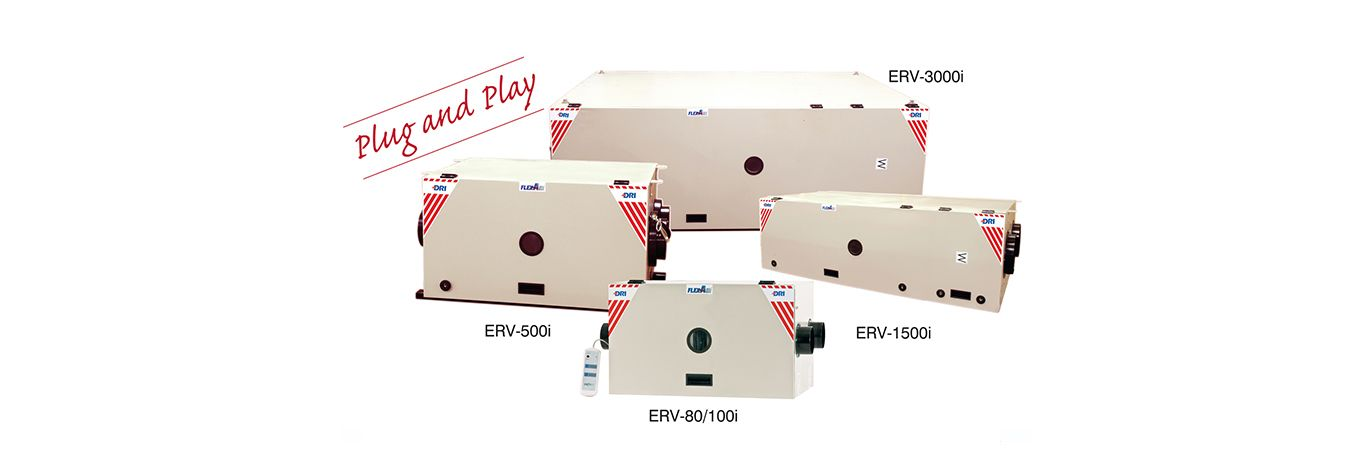
Fresh outdoor air is necessary for proper building ventilation, but conditioning that air can add a significant load to an HVAC system. Outdoor air enters with its own temperature and moisture content, which may differ considerably from the conditions required indoors. Heating or cooling large quantities of outdoor air can therefore increase energy consumption, particularly when ventilation operates for long periods.
A fresh air heat recovery ventilation system helps reduce this energy penalty by transferring heat between outgoing exhaust air and incoming outdoor air. Depending on the system design, energy recovery can involve sensible heat, moisture, or both. This allows incoming ventilation air to be preconditioned before it reaches the main HVAC equipment.
Why Does Fresh Air Increase HVAC Energy Demand?
Ventilation requires outdoor air to enter a building and stale air to leave. The outdoor air may be significantly warmer or colder than the desired indoor supply condition, so the HVAC system must provide additional heating or cooling before that air can be supplied.
The energy requirement also depends on humidity. In warm and humid conditions, outdoor air carries both sensible and latent loads. The HVAC system may need to remove heat and moisture before the air reaches the required indoor condition.
Without energy recovery, the energy contained in exhaust air is generally discharged outdoors. At the same time, new outdoor air enters the building and requires conditioning. This creates an opportunity to transfer some of the energy from the outgoing air to the incoming air before the main heating or cooling process takes place.
What Is a Fresh Air Heat Recovery Ventilation System?
A fresh air heat recovery ventilation system uses a heat exchanger or energy recovery component to transfer energy between two separate air streams. One stream contains outdoor air entering the building, while the other contains exhaust air leaving the building.
The two air streams remain physically separated, but energy can pass between them through the recovery medium or heat exchanger. During heating conditions, warmer exhaust air can preheat colder incoming air. During cooling conditions, cooler exhaust air can help reduce the temperature of warmer incoming air.
The result is a lower conditioning load for the downstream HVAC equipment. A heat recovery ventilation system does not eliminate the need for heating or cooling, but it can reduce the amount of work required to bring outdoor air to the desired supply condition.
A typical system involves:
- Outdoor air entering the recovery section
- Exhaust air leaving the occupied space
- Heat or energy transfer between the two air streams
- Preconditioned outdoor air entering the HVAC system
- Exhaust air leaving the building after energy transfer
How Does Heat Recovery Ventilation Work?
The operating principle is based on the temperature and energy difference between incoming and outgoing air. The exhaust air typically contains energy that can be transferred to the outdoor air stream before both streams leave or enter the building.
During cold-weather operation, indoor exhaust air can be warmer than incoming outdoor air. The recovery system transfers part of this available heat to the incoming air, reducing the heating capacity required downstream.
During warm-weather operation, the process can work in reverse. Cooler exhaust air can absorb some of the heat from incoming outdoor air, reducing the cooling load placed on the HVAC system.
The amount of energy recovered depends on several factors, including airflow rates, temperature differences, heat exchanger characteristics, operating conditions, and system controls. Correct equipment sizing and balanced airflow are therefore important to achieving the expected performance.
What Is an Energy Recovery Ventilator?
An energy recovery ventilator, commonly called an ERV, is designed to exchange energy between exhaust and incoming outdoor air. Depending on its configuration, an ERV can transfer sensible heat and some latent energy associated with moisture.
This makes ERV systems particularly useful where both temperature and humidity affect the ventilation load. The recovery process can reduce the amount of energy needed to condition incoming air while maintaining the required outdoor-air exchange.
The performance of an ERV depends on the characteristics of the recovery medium and the operating conditions. Airflow, temperature, humidity, pressure drop, and control strategy all influence the amount of energy that can be recovered.
Heat Recovery vs. Energy Recovery
Heat recovery generally refers to the transfer of sensible heat between two air streams. Energy recovery can include both sensible and latent energy transfer, which means moisture transfer may also occur depending on the technology.
The distinction matters when designing ventilation systems for buildings with significant humidity loads. A system that only transfers sensible heat may not address the latent component of outdoor air to the same extent as an energy recovery system capable of moisture transfer.
The appropriate technology depends on the building’s climate, ventilation requirements, indoor humidity targets, and HVAC configuration. Engineers should evaluate the complete load profile before selecting a recovery approach.
Where Does a Dedicated Outdoor Air System Fit?
A dedicated outdoor air system is designed specifically to handle the ventilation-air requirement of a building. It can condition outdoor air separately from equipment that manages the building’s general space-conditioning load.
Energy recovery can be incorporated into a dedicated outdoor air system to reduce the energy required to condition incoming ventilation air. This can be useful when outdoor-air quantities are substantial or when ventilation operates independently of the main heating and cooling system.
Separating ventilation treatment from space conditioning can also provide greater control over outdoor-air temperature, humidity, and airflow. The final arrangement depends on building use, occupancy, climate, operating schedules, and the required indoor environmental conditions.
What Happens to Moisture During Energy Recovery?
Moisture can represent a substantial part of the ventilation load, especially in humid climates. When warm outdoor air contains significant water vapour, the HVAC system may need to remove that moisture before the air enters the occupied space.
Some energy recovery technologies can transfer moisture between the exhaust and incoming air streams. This process can reduce the latent load associated with ventilation, depending on the recovery medium and operating conditions.
Moisture transfer needs to be considered carefully because the desired direction of energy and moisture transfer changes according to indoor and outdoor conditions. System design should therefore account for temperature, relative humidity, airflow, and seasonal operating requirements.
How Energy Recovery Reduces HVAC Loads
The main benefit of energy recovery is that the incoming outdoor air does not always need to be conditioned from its original outdoor condition all the way to the final supply condition. Part of that conditioning can take place through energy transfer with the exhaust air.
This reduces the heating or cooling capacity required from downstream equipment. The amount of reduction depends on the recovery efficiency, airflow, temperature difference, moisture conditions, and operating schedule.
Energy recovery can also help reduce peak ventilation loads. This is particularly relevant in buildings where outdoor-air quantities are large and ventilation equipment operates for extended periods.
The overall HVAC design should still account for:
- Outdoor-air volume
- Supply-air temperature
- Exhaust-air conditions
- Sensible and latent loads
- Fan energy
- Pressure drop
- Operating hours
- Control strategy
These factors determine the actual performance of an energy recovery ventilation system.
Can Energy Recovery Work With Evaporative Cooling?
Energy recovery and evaporative cooling can be used as complementary technologies when the system design and climate are suitable. Evaporative cooling uses water evaporation to reduce air temperature, while energy recovery transfers available energy between incoming and outgoing air streams.
For systems using evaporative cooling, moisture conditions become particularly relevant. A dew point evaporative cooling system can provide cooling based on the relationship between air temperature and moisture content, with the exact performance depending on outdoor conditions.
The technologies should be evaluated as part of the complete HVAC design rather than independently. Airflow, humidity, temperature, water consumption, pressure drop, and control requirements all affect the final system configuration.
Factors to Consider When Selecting an ERV System
Selecting an energy recovery ventilator requires an assessment of both ventilation requirements and the energy characteristics of the building. Airflow should be established first because recovery performance depends on the volume of air moving through the system.
Climate conditions also have a major influence. Heating-dominated applications may prioritise sensible heat recovery, while humid cooling conditions may require greater attention to latent energy transfer.
Engineers should also consider:
- Required outdoor-air volume
- Exhaust-air conditions
- Sensible and latent recovery performance
- Pressure drop across the recovery component
- Fan energy consumption
- Filtration requirements
- Controls and bypass operation
- Maintenance access
- Installation space
The recovery system should be selected to work with the rest of the HVAC equipment rather than treated as an isolated component.
Where Are Heat Recovery Ventilation Systems Used?
Heat recovery ventilation can be applied in buildings that require continuous or substantial outdoor-air ventilation. Commercial buildings, institutional facilities, industrial spaces, and other occupied environments may benefit from recovering energy from exhaust air.
The suitability of an ERV depends on the building’s ventilation profile and the relationship between indoor and outdoor conditions. Buildings with high outdoor-air requirements may have greater opportunities to reduce ventilation-related heating and cooling loads.
The system can also be coordinated with air handling equipment, dedicated outdoor-air systems, filtration, dehumidification, and other air-treatment technologies. Proper integration helps ensure that energy recovery supports the overall ventilation strategy.
Maintaining Energy Recovery Performance
Energy recovery equipment needs appropriate maintenance to continue operating as designed. Filters should be inspected and replaced according to operating conditions, while heat-transfer surfaces and recovery components should remain clean.
Airflow balance also matters. Excessive imbalance between supply and exhaust streams can affect recovery performance and may influence building pressure. Sensors, dampers, controls, and bypass functions should also be checked periodically.
Maintenance requirements vary according to the equipment type and application. Following the manufacturer’s recommendations helps maintain airflow, recovery performance, and system reliability over the operating life of the equipment.
Conclusion
A fresh air heat recovery ventilation system reduces HVAC energy loss by transferring available energy between outgoing exhaust air and incoming outdoor air. Instead of allowing conditioned indoor air to leave the building without recovery, the system uses that energy to precondition incoming ventilation air.
The right recovery technology depends on climate, airflow, temperature, humidity, building use, and the required indoor conditions. Sensible heat recovery and energy recovery address different aspects of the ventilation load, so system selection should reflect the actual operating requirements.
For projects that require controlled ventilation and energy recovery, contact Desiccant Rotors International to discuss suitable energy recovery and air-treatment configurations.
Frequently Asked Questions About Heat Recovery Ventilation
How does a fresh air heat recovery ventilation system work?
A fresh air heat recovery ventilation system transfers energy between incoming outdoor air and outgoing exhaust air. This preconditions the incoming air and reduces the heating or cooling required from downstream HVAC equipment.
What is the difference between HRV and ERV?
A heat recovery ventilator generally focuses on sensible heat transfer, while an energy recovery ventilator can transfer sensible and latent energy. An ERV may therefore also transfer moisture between air streams, depending on its recovery technology.
Does an ERV reduce HVAC energy consumption?
An ERV can reduce the energy required to condition outdoor ventilation air by recovering energy from exhaust air. Actual savings depend on airflow, climate, recovery performance, operating hours, and the overall HVAC design.
Is heat recovery ventilation suitable for humid climates?
Heat recovery ventilation can be suitable for humid climates, but the recovery technology needs to match the required moisture-control strategy. Systems capable of latent energy transfer may provide additional benefits where outdoor humidity creates a substantial ventilation load.
Can an ERV work with a dedicated outdoor air system?
Yes. An ERV can be integrated with a dedicated outdoor air system to recover energy from exhaust air before outdoor air is fully conditioned. The configuration depends on airflow, temperature, humidity, controls, and the building’s ventilation requirements.